Beyond Dividends: The Alternative Income Architecture That Affluent Investors Are Building Now

There is a quiet but significant shift underway in how America's most financially sophisticated households generate income. The traditional model — accumulate a large enough portfolio of stocks and bonds, collect dividends and interest, and draw down principal in retirement — remains the default framework for millions of investors. Yet among those with household incomes above $250,000 and investable assets in the multi-million-dollar range, a different architecture is emerging.
These investors are constructing layered income systems that draw from sources well outside conventional markets: royalties from intellectual property, preferred returns from real estate syndications, yield from private credit, and distributions from equity stakes in private businesses. Each stream carries its own risk profile, liquidity characteristics, and tax treatment. Together, they represent a meaningful evolution in wealth strategy — one that deserves careful examination.
Why Conventional Income Sources Are No Longer Sufficient
The case for diversifying beyond dividends and bond coupons is partly structural and partly cyclical. On the structural side, the yield available from investment-grade fixed income has historically been insufficient to sustain the spending needs of high-income retirees without significant principal drawdown. Public equity dividends, meanwhile, have compressed as companies increasingly favor buybacks over distributions.
On the cyclical side, the period of historically low interest rates that defined the 2010s trained a generation of investors to reach for yield wherever it could be found — often in riskier corners of public markets. The normalization of rates has partially addressed this, but it has also created a more competitive landscape for fixed-income alternatives.
The result is that affluent investors who once satisfied their income needs with a diversified bond ladder and a dividend growth portfolio are now exploring vehicles that were previously the exclusive domain of institutional capital. Regulatory changes, platform innovation, and the democratization of private market access have lowered the barriers to entry considerably.
Intellectual Property: The Royalty Economy for Individual Investors
Few income categories are less understood — or more frequently overlooked — by individual investors than intellectual property royalties. Yet the economics can be compelling for those who understand how to access them.
At the most direct level, investors who have created original content, software, or proprietary methodologies can license those assets to generate ongoing royalty income. Authors, musicians, and software developers have long benefited from this model. What is newer is the emergence of secondary markets and investment vehicles that allow investors without creative output of their own to participate in royalty streams.
Music royalty platforms, for example, now allow accredited investors to purchase fractional interests in song catalogs, earning income each time those compositions are streamed, broadcast, or licensed for commercial use. Patent royalty funds operate similarly, aggregating licensing revenue from portfolios of intellectual property held by operating companies.
These instruments are not without risk. Royalty streams are subject to shifts in consumption patterns, platform economics, and legal challenges. Valuation is opaque compared to publicly traded securities. But for investors seeking income that is genuinely uncorrelated with equity markets, IP royalties represent a structurally distinct source of cash flow.
Private Credit: Institutional Yield Now Accessible to Individuals
Private credit — direct lending to middle-market companies outside the traditional banking system — has grown into a multi-trillion-dollar asset class globally, and it is increasingly accessible to high-net-worth individuals through interval funds, business development companies (BDCs), and direct co-investment opportunities.
The appeal is straightforward: private credit instruments typically offer yields meaningfully above comparable public fixed-income securities, reflecting a liquidity premium and the complexity of direct underwriting. Senior secured loans to established businesses, mezzanine debt with equity participation features, and specialty finance vehicles targeting sectors like healthcare receivables or infrastructure all fall within this broad category.
For investors at the $1 million to $5 million investable asset range, BDCs traded on public exchanges offer the most accessible entry point, providing exposure to diversified private loan portfolios with daily liquidity. Those with larger allocations and longer time horizons may work with wealth managers to access institutional private credit funds, which typically require commitments of $250,000 or more and impose lock-up periods of three to seven years.
The critical evaluation criteria for any private credit investment include the manager's underwriting track record across credit cycles, the seniority and collateralization of the underlying loans, fee structures that do not excessively erode yield, and the fund's approach to distressed situations when borrowers encounter difficulty.
Real Estate Syndications: Passive Ownership at Institutional Scale
Direct real estate ownership — the single-family rental property, the small commercial building — has long been a wealth-building tool for American investors. But direct ownership carries operational demands and concentration risk that many affluent professionals prefer to avoid.
Real estate syndications offer an alternative: passive equity investment in larger commercial properties — multifamily apartment complexes, industrial warehouses, self-storage facilities, medical office buildings — alongside a professional operating partner who manages the asset. Investors receive preferred distributions during the hold period and a share of proceeds upon sale, typically over a three-to-seven-year investment horizon.
The income characteristics of syndications vary by property type and deal structure. Value-add deals, which involve acquiring underperforming assets and improving them, tend to defer income in favor of appreciation. Core and core-plus deals in stabilized assets generate more consistent current income, often with preferred return hurdles of 6% to 8% per annum before the sponsor participates in profits.
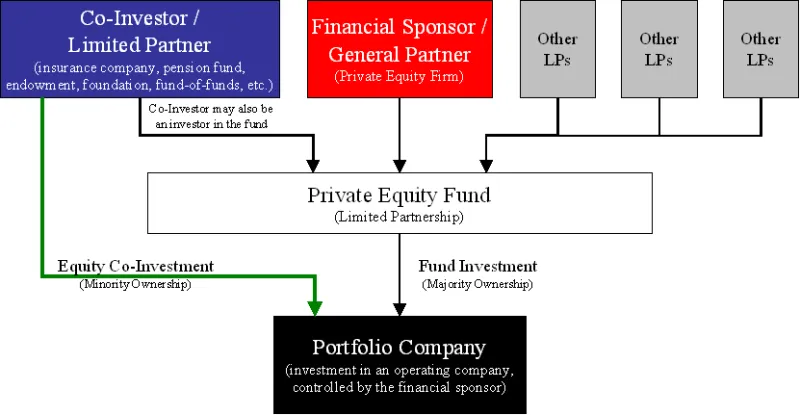
Due diligence on syndication sponsors is paramount. The operator's track record, their equity co-investment alongside limited partners, the quality of their market selection, and their communication practices during challenging periods are all factors that differentiate reliable sponsors from those who perform well only in favorable conditions.
Business Equity Stakes: The Highest-Risk, Highest-Reward Tier
For investors with the appropriate risk tolerance and deal-sourcing networks, acquiring minority equity stakes in private operating businesses can generate income through profit distributions while preserving the possibility of significant capital appreciation.
Angel investments in early-stage companies, search fund acquisitions, and minority stakes in established professional services firms or franchises all fall within this category. The income profile is inherently unpredictable — early-stage businesses rarely distribute cash, while mature, cash-generative businesses may provide consistent distributions that compare favorably with any other alternative income source.
This tier is most appropriate for investors at the higher end of the wealth spectrum who can afford to hold illiquid positions for extended periods, absorb the occasional total loss, and dedicate meaningful time to evaluating opportunities. It is not a passive strategy. It requires either deep personal expertise in the relevant industry or trusted relationships with operators whose judgment can be relied upon.
Aligning Strategy With Wealth Stage
Not every alternative income stream is appropriate for every investor. Wealth stage, income needs, tax situation, and temperament all influence which vehicles belong in a given portfolio.
An investor in their late 40s with a high W-2 income, a growing portfolio, and no immediate need for current income might prioritize private credit and real estate syndications for their yield and diversification benefits, while allocating a modest portion to higher-risk equity opportunities. An investor approaching retirement with a larger asset base and a genuine income requirement might weight more heavily toward stabilized real estate and established royalty streams, where cash flow predictability is paramount.
What unites all of these strategies is the need for rigorous evaluation, patience, and professional guidance. The alternative income space has grown more crowded, and with that crowding has come a proliferation of mediocre offerings dressed in the language of sophistication. The discerning investor's task is not simply to access these markets, but to navigate them with the same discipline applied to any other dimension of a comprehensive wealth plan.