Illiquid by Design: Why America's Wealthiest Families Are Deliberately Tying Up Their Capital
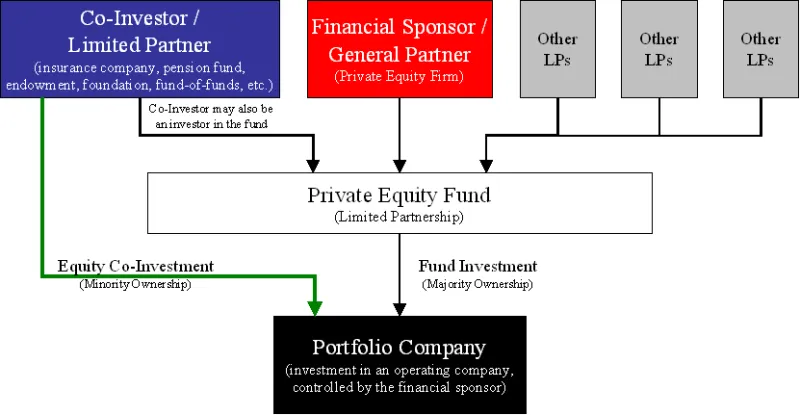
Photo: Urbanrenewal, Public domain, via Wikimedia Commons
Conventional financial wisdom has long celebrated liquidity as a virtue. The ability to convert assets into cash quickly is treated as a proxy for financial health, a safety net, a mark of prudence. Yet among the nation's most sophisticated investors — families managing portfolios north of $10 million — a decidedly different philosophy is taking hold. These individuals are not merely accepting illiquidity as a trade-off. They are engineering it, deliberately restructuring balance sheets to lock capital away in private equity, real estate, and alternative vehicles with multi-year or even multi-decade time horizons.
This is not financial recklessness dressed up in tailored clothing. It is a calculated response to the realities of modern wealth management, shaped by tax policy, market structure, and a deepening understanding of how compounding truly works over time.
The Liquidity Premium in Reverse
Traditional finance teaches that investors demand a premium for accepting illiquidity — that is, they expect higher returns in exchange for giving up the ability to exit quickly. What is less frequently discussed is the flip side of that equation: liquid markets are extraordinarily efficient, and efficiency, by definition, compresses excess returns.
Public equity markets in the United States are among the most analyzed, most traded, and most institutionally dominated in the world. The probability of a sophisticated individual investor consistently identifying and capitalizing on mispriced public securities is, statistically, quite low. Private markets, by contrast, remain fragmented, relationship-driven, and information-asymmetric — precisely the conditions that allow skilled allocators to generate meaningful alpha.
For wealthy families with long time horizons and no pressing need to liquidate holdings, this asymmetry becomes a genuine structural advantage. By accepting the illiquidity that institutional investors and endowments have long embraced, they gain access to return profiles that simply do not exist in publicly traded markets.
The Tax Architecture of Illiquid Investing
Beyond raw return potential, the tax implications of illiquid investments are particularly compelling for high-net-worth individuals navigating the upper brackets of the U.S. tax code.
Private equity and real estate investments, structured appropriately, offer meaningful deferral of taxable events. Unlike a stock portfolio that generates realized gains each time a position is sold or rebalanced, a private fund investment may hold capital for five to ten years before a liquidity event occurs. During that time, no capital gains tax is triggered, allowing the full compounding effect to operate uninterrupted.
Real estate, in particular, offers a suite of tax advantages unavailable in other asset classes: depreciation deductions, 1031 exchange provisions that allow for the deferral of gains upon reinvestment, and — in the context of estate planning — the potential for a stepped-up cost basis that can effectively eliminate embedded gains upon transfer to heirs. For families engaged in multi-generational wealth planning, these mechanics are not peripheral considerations. They are central to the overall strategy.
Psychological Discipline as a Wealth-Building Tool
There is a dimension to this trend that financial models do not easily capture: the behavioral one.
Research in behavioral finance consistently demonstrates that investor returns lag fund returns — not because the funds underperform, but because individual investors trade at inopportune moments, selling during downturns and chasing performance during rallies. Liquidity, paradoxically, enables this self-defeating behavior. When capital can be moved with a phone call or a few keystrokes, the temptation to react to short-term volatility becomes nearly irresistible.
Illiquid investments remove that temptation entirely. A commitment to a private equity fund with a seven-year lock-up cannot be unwound because of a poor jobs report or a turbulent quarter on the S&P 500. The investor is structurally prevented from making the emotionally driven decisions that erode long-term returns. In this sense, illiquidity functions as a form of enforced patience — a feature, not a bug, for investors who understand their own psychological vulnerabilities.
Many of the affluent families restructuring their balance sheets in this direction are doing so with full awareness of this dynamic. They are not simply seeking higher returns. They are seeking protection from themselves.
Structuring the Balance Sheet for the Long Arc
For families considering a meaningful allocation to illiquid assets, the structural question is not whether to embrace this approach, but how to calibrate it responsibly. The critical variable is the liquidity reserve: the portion of the portfolio that must remain accessible to fund ongoing lifestyle expenses, planned capital expenditures, and unforeseen obligations.
A general framework employed by many sophisticated wealth management teams involves segmenting the portfolio into three distinct buckets. The first is a near-term liquidity reserve — typically one to three years of anticipated cash needs, held in money market instruments, short-duration bonds, or other highly liquid vehicles. The second is a medium-term allocation to semi-liquid assets such as publicly traded equities and investment-grade fixed income. The third, and often the largest in terms of long-term growth potential, is the illiquid sleeve: private equity, private credit, real assets, and alternative funds.
The precise allocation across these buckets will vary based on the family's income profile, philanthropic intentions, estate planning objectives, and generational timeline. What is consistent across successful implementations is the intentionality — the recognition that liquidity is a resource to be deployed strategically, not a default setting.
Navigating the Current Environment
The macroeconomic context of 2024 has added further impetus to this trend. With public equity valuations stretched by historical standards and fixed income offering more competitive yields than investors have seen in over a decade, the opportunity cost calculus has shifted. Private credit, in particular, has emerged as a compelling destination for capital that might previously have sat in lower-yielding liquid instruments.
Simultaneously, the continued institutionalization of private markets — driven by the expansion of interval funds, evergreen structures, and democratized access platforms — has made it more practical than ever for high-net-worth individuals to participate meaningfully in asset classes once reserved for institutional endowments and sovereign wealth funds.
The wealthiest families in America are not locking their capital away out of fear or inertia. They are doing so with strategic clarity, guided by an understanding that the path to enduring, multi-generational wealth runs not through the frantic liquidity of public markets, but through the patient, compounding power of capital committed for the long term.